

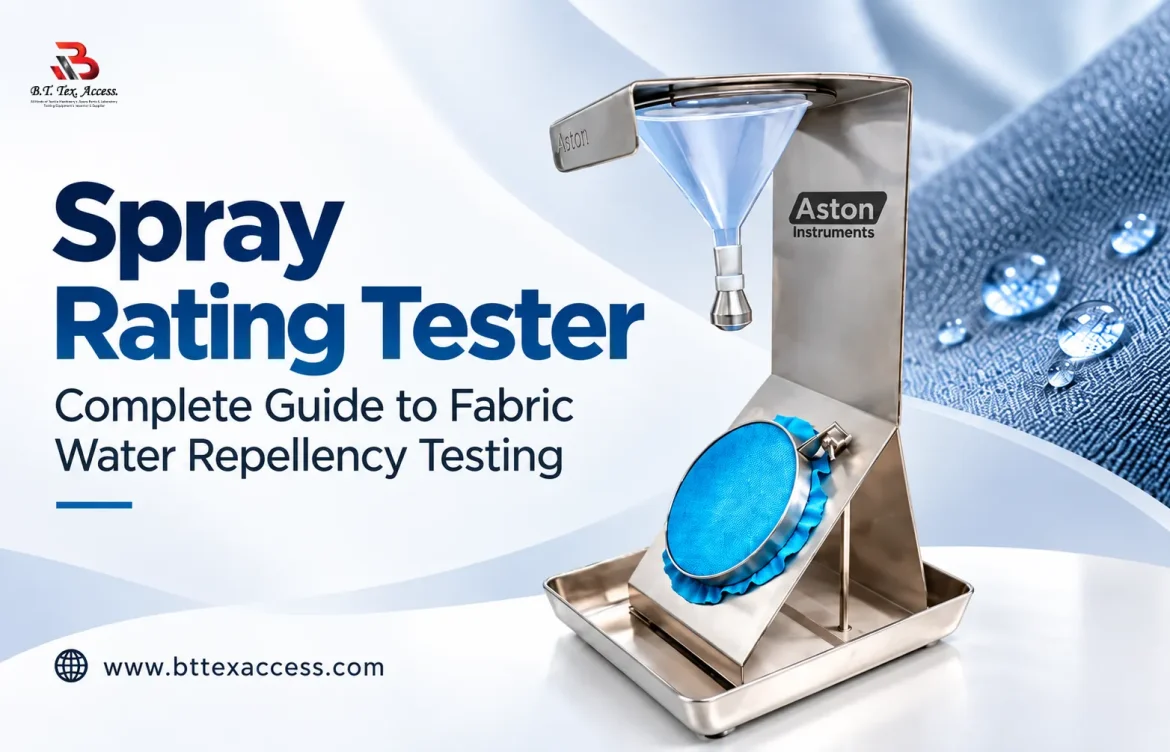
Spray Rating Tester: Complete Guide to Fabric Water Repellency Testing
Spray Rating Tester: Complete Guide to Fabric Water Repellency Testing
Introduction
In the textile industry, water repellency is an important performance factor for fabrics used in outdoor clothing, sportswear, protective garments, and technical textiles. Manufacturers need accurate testing methods to ensure their fabrics can resist surface wetting and meet customer expectations.
A Spray Rating Tester is a specialised textile testing instrument that evaluates a fabric’s water-repellency performance by exposing a controlled water spray to the fabric surface and measuring how much the surface becomes wet.
For textile manufacturers, research laboratories, and quality control teams, reliable water repellency testing helps verify fabric finishing treatments, improve product consistency, and maintain international quality standards.
BT Tex Access provides professional textile testing solutions for industries that require accurate measurement and quality control. The Spray Rating Tester AISRT500 by Aston Instruments helps textile professionals perform standardised spray rating tests to evaluate fabric water repellency performance.
What Is a Spray Rating Tester?
A Spray Rating Tester is a textile testing machine used to determine the resistance of fabric surfaces against wetting when exposed to water spray under controlled laboratory conditions.
Unlike waterproof testing equipment that measures water penetration resistance, a spray rating tester evaluates the ability of a fabric surface to repel water droplets.
The test helps manufacturers understand:
- How effectively water-repellent finishes perform
- Whether fabric treatments meet required standards
- How materials behave under simulated exposure to moisture
The instrument is commonly used for testing:
- Outdoor fabrics
- Rainwear materials
- Jackets and protective clothing
- Sportswear textiles
- Coated fabrics
- Technical textiles
For laboratories and manufacturers looking for reliable textile testing instruments, BT Tex Access offers the Spray Rating Tester AISRT500, a professional solution designed for accurate fabric water repellency evaluation.
Why Is Water Repellency Testing Important in Textile Manufacturing?
Modern textile products are expected to provide comfort, durability, and protection against environmental conditions.
A fabric may look water-resistant, but without proper testing, manufacturers cannot accurately determine its performance.
Water repellency testing helps manufacturers:
Maintain Product Quality
Testing ensures that fabrics consistently meet expected performance levels during production.
Verify Chemical Finishes
Many fabrics receive water-repellent treatments such as:
- Durable Water Repellent (DWR) coatings
- Fluorocarbon finishes
- Silicone-based finishes
Spray testing helps evaluate whether these treatments are working effectively.
Reduce Production Problems
Quality testing helps identify:
- Poor finishing application
- Uneven coating
- Fabric performance issues
before products reach customers.
Meet International Standards
Global textile buyers often require manufacturers to follow recognised testing methods such as:
- AATCC 22
- ISO 4920
What Does a Spray Rating Tester Measure?
A Spray Rating Tester measures the surface water repellency of textile materials.
During testing, the instrument evaluates how water behaves when sprayed onto a fabric sample.
The result shows:
- Whether water forms droplets
- Whether water spreads across the fabric
- Whether the surface becomes partially or completely wet
The final result is represented through a spray rating scale.
A higher rating indicates better water repellency performance.
Spray Rating Tester vs Waterproof Tester
| Feature | Spray Rating Tester | Waterproof Tester |
| Main Purpose | Measures surface water repellency | Measures resistance against water penetration |
| Testing Method | Controlled water spray | Water pressure or hydrostatic testing |
| Result | Spray rating score | Water penetration pressure/value |
| Common Standards | AATCC 22, ISO 4920 | Hydrostatic pressure standards |
| Application | Outdoor clothing, treated fabrics | Waterproof materials |
Many people confuse water repellency testing with waterproof testing. However, these are two different textile performance measurements.A fabric can have excellent water repellency but may not be completely waterproof.
For example:
A jacket fabric may cause water droplets to roll off its surface, but under heavy pressure or continuous exposure, water may eventually pass through.
How Does a Spray Rating Tester Work?
A spray rating tester exposes the fabric to controlled water spray.
The testing process generally includes the following steps:
Step 1: Prepare Fabric Sample
Prepare a textile specimen according to the required testing standard.
The sample should be:
- Clean
- Properly conditioned
- Correctly sized
Step 2: Mount the Fabric
Place the fabric sample on the testing holder at a specific angle.
This ensures consistent water distribution during testing.
Step 3: Apply Controlled Water Spray
The instrument sprays a fixed amount of water onto the fabric surface through a calibrated nozzle.
The spray conditions are controlled to maintain accurate results.
Step 4: Evaluate Fabric Surface
After spraying, the tester examines:
- Water absorption
- Surface wetting pattern
- Droplet behavior
Step 5: Assign Rating Value
The fabric appearance is compared with a standard rating chart.
The final rating determines the water repellency performance.
Spray Rating Test Standards
Professional textile laboratories follow internationally recognised standards to ensure accurate and repeatable results.
AATCC 22 Spray Test
The AATCC 22 standard is one of the most commonly used methods for evaluating the water repellency of textile fabrics.
It measures how well a fabric surface resists wetting after water spray exposure.
Commonly used in:
- Apparel manufacturing
- Outdoor clothing production
- Textile laboratories
ISO 4920 Standard
The ISO 4920 spray test method evaluates the surface wetting resistance of textile fabrics.
It provides internationally accepted procedures for testing fabric water repellency.
Other Related Standards
Depending on industry requirements, manufacturers may also follow:
- EN 24920
- GB/T 4745
- Company-specific testing methods
Using standardised testing methods allows manufacturers to compare results accurately across different production batches.
Spray Rating Scale Explained
The spray rating result is usually evaluated using a numerical scale.
| Rating | Performance |
| 100 | No sticking or wetting of surface |
| 90 | Slight random wetting |
| 80 | Small water droplets or wet areas |
| 70 | Partial surface wetting |
| 50 | Complete surface wetting |
A higher rating means better water repellency performance.
Main Components of a Spray Rating Tester
A professional spray rating tester consists of several important components:
Spray Nozzle
The nozzle controls:
- Water distribution
- Spray pattern
- Testing consistency
A properly calibrated nozzle is essential for accurate results.
Fabric Sample Holder
The holder keeps the specimen positioned correctly during testing.
It ensures:
- Correct angle
- Stable positioning
- Repeatable results
Water Reservoir
The reservoir provides a controlled water supply during testing.
Rating Chart
The rating chart helps laboratory technicians compare the tested fabric surface with standard references.
Supporting Structure
High-quality testers are designed with durable materials to provide:
- Long-term reliability
- Easy maintenance
- Stable operation
Applications of Spray Rating Tester
Spray rating testers are widely used across multiple industries.
1. Apparel Industry
Manufacturers use spray rating tests for:
- Jackets
- Rainwear
- Outdoor clothing
- Protective garments
2. Sportswear Industry
Performance fabrics require water management properties for:
- Running apparel
- Hiking clothing
- Athletic products
3. Technical Textiles
Applications include:
- Protective textiles
- Industrial fabrics
- Outdoor materials
4. Textile Research Laboratories
Laboratories use spray rating testers for:
- Product development
- Fabric comparison
- Quality verification
Choosing the Right Spray Rating Tester
Before purchasing a spray rating tester, manufacturers should consider several factors.
1. Testing Standards Compatibility
Ensure the machine supports required standards such as:
- AATCC 22
- ISO 4920
2. Testing Accuracy
Important factors include:
- Spray consistency
- Sample positioning
- Measurement reliability
3. Build Quality
Look for:
- Durable construction
- Corrosion-resistant materials
- Easy operation
4. Supplier Support
A reliable supplier should provide:
- Technical guidance
- Product information
- Spare parts availability
BT Tex Access supports textile and industrial customers with reliable testing solutions and related equipment support.
For long-term equipment maintenance, businesses can also explore suitable textile machine spare parts and replacement solutions available through BT Tex Access.
Benefits of Using a Spray Rating Tester for Textile Quality Control
A Spray Rating Tester is more than just a testing instrument; it is an essential quality control solution for manufacturers producing fabrics that require water-repellent performance.
By integrating spray testing into the production process, textile companies can improve product reliability, maintain consistent quality, and meet customer expectations.
1. Ensures Consistent Fabric Quality
Textile production involves multiple stages where fabric performance can change.
Factors such as:
- Chemical finishing process
- Fabric construction
- Dyeing and treatment methods
- Production conditions
can affect water repellency.
A Spray Rating Tester allows manufacturers to test different production batches and maintain consistent quality standards.
2. Verifies Water-Repellent Finishing Performance
Many fabrics receive special treatments to improve water resistance.
Examples include:
- Durable Water Repellent (DWR) coating
- Silicone finishing
- Resin finishing
- Surface treatment technologies
Spray rating testing helps manufacturers confirm whether these treatments provide the expected performance.
3. Supports International Buyer Requirements
Many international apparel brands and textile buyers require suppliers to provide testing results before approving materials.
A professional textile testing setup helps manufacturers demonstrate:
- Product reliability
- Standard compliance
- Quality assurance
This is especially important for exporters supplying global markets.
4. Reduces Product Returns and Quality Issues
Poor water repellency performance can lead to:
- Customer complaints
- Product rejection
- Reduced brand trust
Regular testing helps identify problems before products reach the market.
Common Mistakes During Spray Rating Testing
Even with a high-quality Spray Rating Tester, incorrect testing practices can affect results.
Below are common issues laboratories should avoid.
1. Incorrect Fabric Preparation
Prepare fabric samples according to testing requirements.
Problems may occur if the sample:
- Has contamination
- Contains dust or chemicals
- Is not conditioned properly
2. Incorrect Spray Conditions
Testing accuracy depends on maintaining correct conditions.
Errors may happen due to:
- Wrong water quantity
- Incorrect spray time
- Improper nozzle positioning
3. Dirty or Blocked Spray Nozzle
The spray nozzle is one of the most important parts of the instrument.
A blocked nozzle can create:
- Uneven spray distribution
- Incorrect test results
- Poor repeatability
Regular cleaning and inspection are necessary.
4. Incorrect Rating Evaluation
Evaluate the final rating carefully using the standard comparison method.
Poor lighting conditions or incorrect observation can affect results.
Spray Rating Tester Maintenance Guide
Proper maintenance extends equipment life and maintains testing accuracy.
1. Clean the Nozzle Regularly
Check and clean the nozzle to ensure consistent water spray.
2. Use Clean Testing Water
Using contaminated water can affect:
- Spray performance
- Fabric appearance
- Test accuracy
Laboratories should follow standard testing recommendations.
3. Inspect Sample Holder
Regularly check:
- Holder alignment
- Surface condition
- Stability
4. Perform Regular Calibration
Calibration ensures:
- Accurate measurement
- Repeatable results
- Standard compliance
Laboratories should maintain proper calibration records.
Technical Specifications to Consider Before Buying
When selecting a Spray Rating Tester, technical specifications matter.
Important specifications include:
Testing Standards
The equipment should support recognised standards such as:
- AATCC 22
- ISO 4920
Spray System
Check:
- Nozzle design
- Spray uniformity
- Water delivery control
Sample Size Compatibility
Different industries may require different specimen dimensions.
Construction Material
Durable materials help ensure:
- Long service life
- Resistance to corrosion
- Stable operation
Why Choose BT Tex Access for Spray Rating Testing Solutions?
BT Tex Access provides reliable scientific and textile testing equipment solutions for industries that require accurate measurement and quality control.
For textile manufacturers, laboratories, and research organisations, choosing the right testing equipment supplier matters because equipment accuracy directly affects product quality decisions.
The Spray Rating Tester AISRT500 by Aston Instruments provides a practical solution for evaluating fabric surface water repellency according to recognised textile testing methods.
You can explore the detailed product information here:
Spray Rating Tester AISRT500 – Aston Instruments
Why BT Tex Access?
1. Industry-Focused Equipment Solutions
BT Tex Access understands the requirements of textile and laboratory professionals and provides equipment designed for real industrial applications.
2. Reliable Testing Instruments
Quality testing requires accurate instruments.
BT Tex Access focuses on supplying equipment that supports:
- Consistent results
- Laboratory accuracy
- Quality control processes
3. Technical Product Guidance
Selecting laboratory equipment can be challenging.
BT Tex Access helps customers understand:
- Product specifications
- Application requirements
- Suitable testing solutions
4. Support Beyond Equipment Supply
Testing equipment requires long-term support.
For maintenance and replacement requirements, customers can also access suitable textile machine spare parts and related equipment solutions through BT Tex Access.
How to Select the Best Spray Rating Tester for Your Laboratory
Before investing in a spray rating tester, consider your testing requirements.
1. Identify Your Testing Purpose
Ask:
- Are you testing apparel fabrics?
- Technical textiles?
- Research samples?
- Production batches?
The application determines the required equipment specification.
2. Check Required Testing Standards
Different industries may require different standards.
Confirm whether your customers require:
- AATCC 22
- ISO 4920
- Other internal testing methods
3. Consider Testing Frequency
High-volume manufacturers should select equipment that supports:
- Frequent testing
- Stable performance
- Easy operation
4. Evaluate Supplier Reliability
A good equipment supplier should provide:
- Product documentation
- Technical support
- Spare parts availability
- After-sales assistance
Future of Textile Water Repellency Testing
The textile industry is continuously evolving.
Growing demand for:
- Sustainable fabrics
- High-performance clothing
- Technical textiles
- Outdoor products
is increasing the importance of accurate testing methods.
Modern manufacturers are focusing on:
- Better durability
- Environment-friendly finishing
- Consistent product performance
Advanced testing equipment helps companies develop better materials and maintain competitive advantages.
Frequently Asked Questions About Spray Rating Tester
What is a Spray Rating Tester used for?
A Spray Rating Tester is used to evaluate the water repellency performance of textile fabrics by applying controlled water spray and measuring surface wetting behaviour.
What standard is used for spray rating testing?
The most common standards are AATCC 22 and ISO 4920, which define procedures for evaluating fabric water repellency.
Is a Spray Rating Tester the same as a waterproof testing machine?
No. A Spray Rating Tester measures surface water repellency, while waterproof testing equipment measures resistance against water penetration under pressure.
What materials can be tested using a Spray Rating Tester?
It can be used for:
- Textile fabrics
- Outdoor clothing materials
- Sportswear fabrics
- Coated textiles
- Technical fabrics
What does a 100 spray rating mean?
A rating of 100 indicates that the tested fabric surface shows excellent water repellency with no visible wetting.
Why do textile manufacturers need spray testing?
Manufacturers use spray testing to verify finishing quality, maintain production standards, and ensure fabrics meet customer requirements.
How often should a Spray Rating Tester be calibrated?
Calibration frequency depends on laboratory usage and quality management requirements. Regular inspection and calibration help maintain accurate results.
Final Thoughts
A Spray Rating Tester plays an important role in modern textile quality control by helping manufacturers evaluate fabric water repellency accurately.
From apparel manufacturers to research laboratories, reliable spray testing helps improve product performance, maintain international standards, and deliver better textile products.
For organisations looking for dependable textile testing solutions, BT Tex Access provides professional equipment solutions designed to support accurate measurement and quality assurance.
The Spray Rating Tester AISRT500 by Aston Instruments is an ideal solution for laboratories and textile manufacturers that require reliable water repellency testing performance.